

How Fewer Cars on the Road Means Fewer Accidents
This isn't a claim backed by a specific number — it's a mechanism worth thinking through: every seat filled in an existing car is one less car someone else has to put on the road at all.


Road safety in Pakistan's cities is shaped by a lot of factors that a ride-hailing app has no control over — road design, enforcement, driver training, vehicle condition. But there is one factor a per-seat model does influence directly, and it's worth reasoning through honestly rather than dressing it up with numbers nobody can actually verify: how many cars are on the road carrying how many people.
The basic mechanism: fewer trips, not just fewer cars
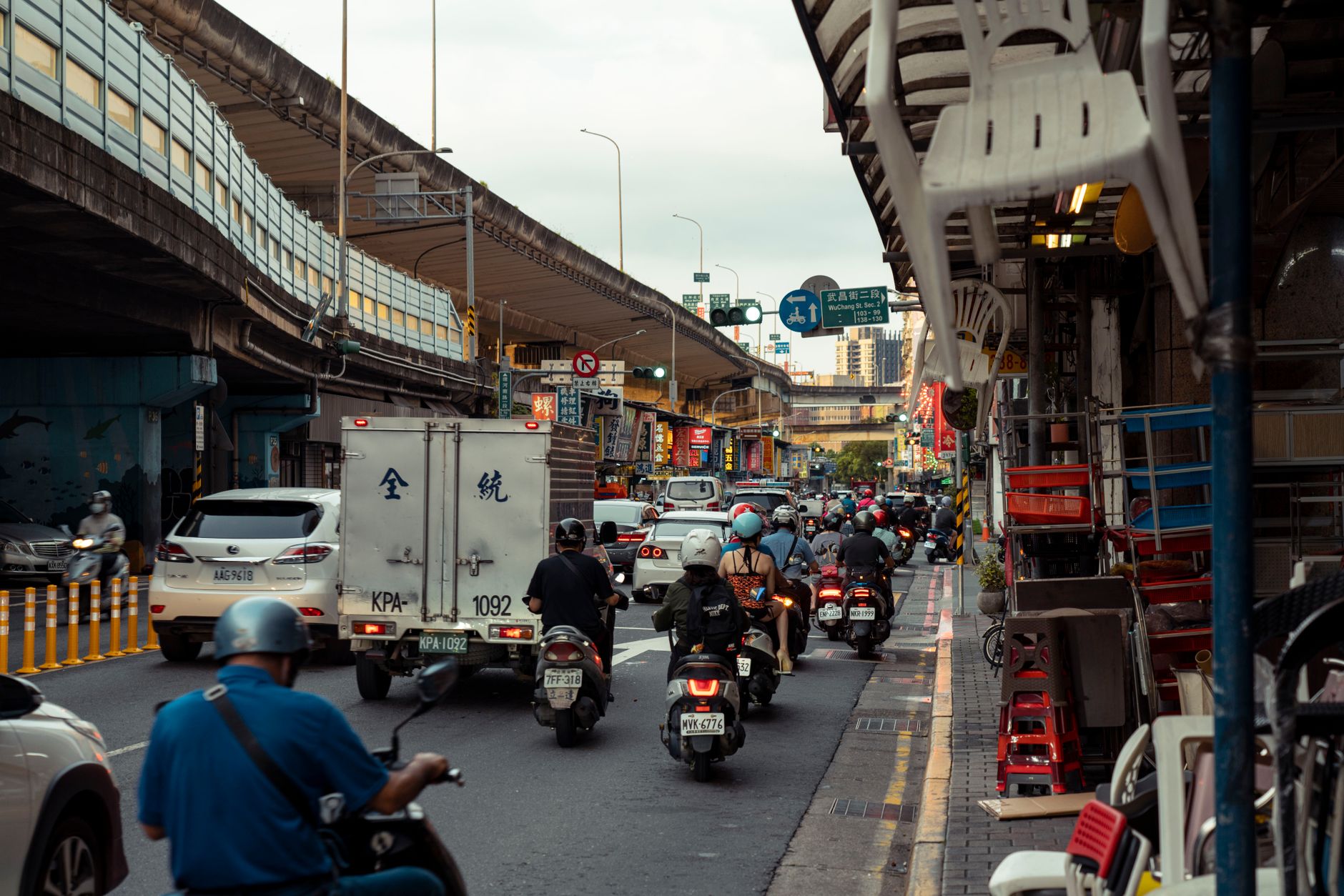
Picture three colleagues who work near each other and live near each other, each currently taking a separate ride-hailing trip to the same office at roughly the same time. That's three cars, three drivers, three trips through the same congested stretch of road. If those three riders instead fill three seats in one car heading the same direction, the outcome isn't "the same three people travelling slightly differently" — it's two entire trips that simply don't happen. Two fewer cars merging, braking, and turning through every intersection on that route, every single day it repeats.
This is the part that doesn't need a study to make sense: more vehicles moving through the same road space at the same time means more points where two vehicles can be in the wrong place together — a merge, a sudden stop, a blind turn. Fewer vehicles making the same trip reduces the number of those moments, purely by reducing how much traffic exists to interact with in the first place.
Two more factors that compound with fewer cars
- No surge pricing removes a rushing incentive. When a fare spikes with demand, there's a built-in pressure to complete more trips faster during that window. Shareide's flat, no-surge, driver-set-or-bid fare doesn't create that incentive — a driver isn't paid more for finishing a trip in less time during a busy hour.
- Every driver is CNIC-verified before their first ride. That doesn't guarantee careful driving, but it does mean every driver on the platform has a checked identity, license, and vehicle registration on file — a baseline that removes at least the anonymous, unaccountable end of the risk spectrum.
What this claim is, and isn't
To be direct about it: this is a logical argument, not a measured outcome. Shareide does not have — and would not publish — an invented statistic like "X% fewer accidents," because that number doesn't exist and can't be verified from a single app's ride data. What can be said honestly is the mechanism: fewer cars making the same trip is fewer opportunities for a road accident to happen, full stop, independent of anything about who is driving. Per-seat ride sharing, at scale, moves the same number of people using fewer vehicles. That's the entire claim, and it's one worth taking seriously without needing to inflate it.
Frequently asked questions
Does Shareide track or publish accident statistics?
No. This article makes a reasoning-based case, not a data claim — treat it as logic worth considering, not a measured result.
Does a shared ride mean a longer or more dangerous route?
No — each rider is still picked up and dropped at their own address; sharing a seat doesn't change the route to something riskier, it adds stops along broadly the same direction.
How does driver verification fit into this?
Every driver passes CNIC and vehicle verification before accepting rides, which is a separate safeguard from the "fewer cars" argument, but works alongside it.
More from the Shareide Blog
Handpicked reads to help you get the most out of Shareide




Try Per-Seat Ride Sharing Today
Download Shareide and book your first seat - cheaper, verified, and built for Pakistan's daily commuters.
Download App